
Summary: Cloud computing for business is changing how companies operate in today’s digital world. Many organizations now rely on cloud services for business to manage data, run applications, and scale faster. This shift supports digital transformation cloud strategies and opens new growth opportunities for startups and enterprises.
Cloud computing has reshaped how modern businesses handle technology and growth. Instead of relying on costly hardware, companies now use cloud services for business to access tools and data online with ease. This shift brings major benefits of cloud computing, including flexibility, speed, and reduced expenses. Many organizations, especially startups, adopt cloud computing for small business to stay competitive without heavy investment. With cloud storage for business, data remains secure and accessible anytime. Moreover, strong cloud technology advantages allow teams to collaborate and scale operations smoothly. As digital demands grow, cloud computing continues to drive innovation, efficiency, and smarter decision-making across industries worldwide.
Table of Contents
What is Cloud Computing for Business and How Does It Work?
Cloud computing for business allows companies to access computing power, storage, and software through the internet. Instead of building expensive servers, businesses use business cloud infrastructure managed by providers. This explains how cloud computing works in a simple and practical way.
Behind the scenes, cloud computing services operate through remote data centers. These systems deliver cloud-based applications and cloud storage for business instantly. Understanding the importance of cloud computing helps businesses stay competitive and efficient in modern markets.
Types of Cloud Computing for Business You Must Know
Different types of cloud computing for business help organizations choose the right setup. These include public private hybrid cloud systems and various cloud deployment models that match different needs and budgets.
Deployment and Service Models in Cloud Computing for Business
Understanding SaaS PaaS IaaS explained makes it easier to choose the right service. SaaS delivers ready-to-use apps, PaaS supports development, and IaaS provides infrastructure. These cloud infrastructure services and cloud hosting solutions give businesses full control and flexibility.
Key Benefits of Cloud Computing for Business Growth
Businesses adopt cloud solutions because of the many benefits of cloud computing. It improves speed, reduces delays, and supports business growth with cloud strategies. Many startups rely on cloud for startups to launch quickly without heavy investment.
Another major advantage is scalability in cloud computing. Companies can grow without limits and improve productivity cloud performance. These cloud technology advantages make operations smoother and more efficient for daily business tasks.
How Cloud Computing Reduces Business Costs and Increases ROI
Cloud computing for business helps companies reduce IT costs with cloud systems. Instead of buying hardware, businesses use the pay-as-you-go cloud model which ensures better financial control. This clearly shows how cloud computing reduces business costs in real-world scenarios.
Moreover, cloud cost savings come from lower maintenance and upgrades. Businesses also benefit from affordable cloud solutions and improved IT infrastructure savings. Comparing cloud vs on-premise cost reveals why cloud is the smarter long-term choice.
| Cost Factor | Cloud Computing | On-Premise IT |
|---|---|---|
| Initial Investment | Low | High |
| Maintenance | Included | Expensive |
| Scalability | Flexible | Limited |
Real-World Uses of Cloud Computing for Business
There are many cloud computing examples in small business that show its value. Companies use cloud applications for business operations like CRM, file sharing, and analytics. These are practical uses of cloud computing in business across industries.
For example, retail companies use cloud storage solutions for small business to manage inventory. These real-world cloud computing examples show how businesses improve efficiency and customer experience using modern tools.
Cloud Security and Data Protection for Businesses
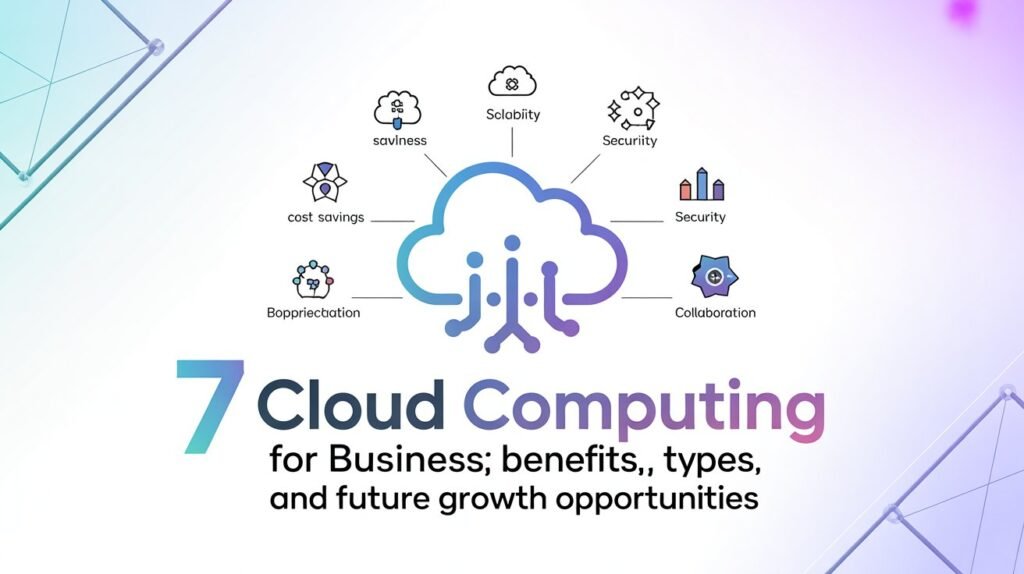
Security is a major concern, yet cloud security for small business offers strong protection. Providers use encryption and advanced systems to ensure data protection in cloud environments. This makes secure cloud storage reliable for sensitive data.
In addition, cloud backup and recovery systems protect against data loss. Businesses also benefit from cybersecurity cloud solutions and meet cloud compliance standards. These features improve trust and reliability for digital operations.
How to Implement Cloud Computing in Your Business
Starting with cloud requires a clear cloud adoption strategy. Businesses must understand how to migrate to cloud and follow proper steps to implement cloud computing for smooth transition.
Planning includes moving data to the cloud securely and choosing the right provider. Knowing how to choose cloud provider for small business ensures long-term success and better system performance.
Future Trends in Cloud Computing for Business (2026 and Beyond)
The future of cloud computing is driven by innovation and automation. Technologies like AI and cloud computing are transforming how businesses analyze data and make decisions.
Upcoming cloud computing trends 2026 include automation and serverless computing benefits. Tools like cloud automation tools will simplify operations and improve efficiency across industries.
Conclusion:
Cloud computing for business is no longer optional. It plays a key role in modern growth strategies. Understanding why businesses use cloud computing helps companies stay competitive in a fast-changing world.
Overall, the advantages of cloud computing for small businesses make it a powerful solution. Businesses that adopt cloud technology today will lead tomorrow’s digital economy.
FAQs:
What is cloud computing for business?
Cloud computing for business means using online servers and tools instead of physical hardware. It helps companies store data, run apps, and manage operations more efficiently.
Why do businesses use cloud computing?
Businesses use cloud computing to save costs, improve flexibility, and scale quickly. It also supports remote work and better collaboration across teams.
Is cloud computing safe for small businesses?
Yes, cloud computing offers strong security features like encryption and backups. Many providers deliver better protection than traditional systems.
How does cloud computing reduce business costs?
It removes the need for expensive hardware and maintenance. The pay-as-you-go model ensures you only pay for what you use.
What are the main types of cloud computing?
The main types include public, private, and hybrid cloud. Service models include SaaS, PaaS, and IaaS, each serving different business needs.